


Quality control in footwear manufacturing directly impacts product durability, wear comfort and market reception, serving as a core determinant of a brand’s reputation. According to the Footwear Consumer 2030 report released by the World Footwear organisation, global demand for footwear that balances functionality, wellness and fashion will keep rising in the years ahead. This trend is driven by the global expansion of middle-class consumers — across markets including China, Russia and India, this demographic is projected to hit 4.8 billion by 2030, a massive jump from just 1.8 billion recorded in 2009.
Elevating the quality of functional, comfortable everyday footwear has become an unavoidable challenge for all manufacturers. As highlighted by the China Leather Industry Association (CLIA), many new shoe styles appear flawless on the surface yet harbour invisible structural defects that cannot be detected by visual inspection alone. A comprehensive in-production quality control system safeguards footwear safety and consistent production workflows. It covers physical and chemical testing of raw materials, inspections during stitching and moulding stages, finished product audits, and compliance verification against release standards (refer to the national standard GB 25038-2024 General Safety Requirements for Footwear, published on the official CLIA website).
Therefore, professional quality control not only serves as the core guarantee for shoe manufacturers, but also embodies their brand commitment and the trust placed by customers.
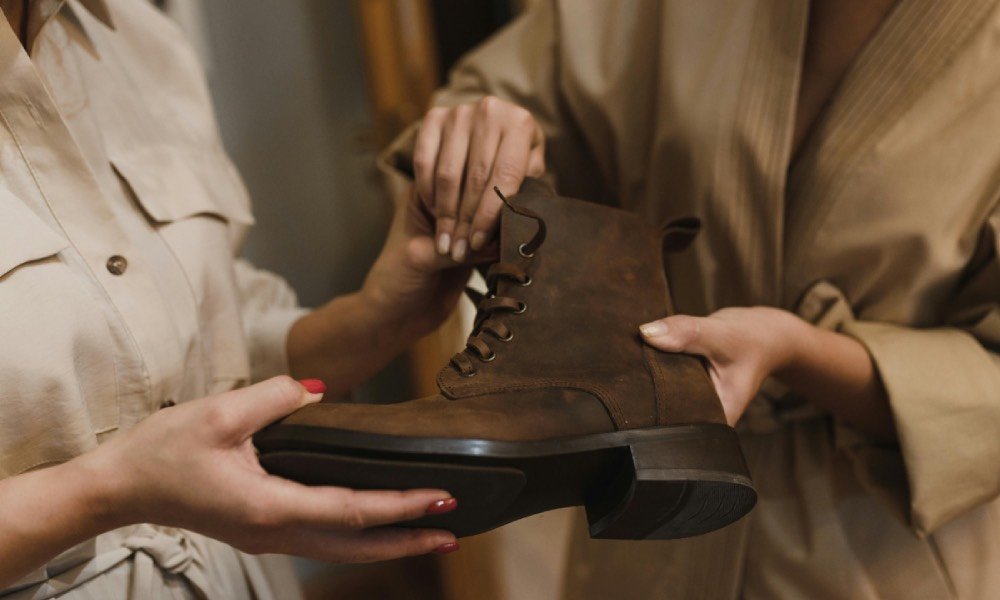
1. Quality Control: Definition & Objectives
Footwear quality control ensures every pair delivered is safe for wear, secure during walking and comfortable to use. Standardised inspection procedures deliver a full evaluation of raw material quality, manufacturing processes, physical performance, chemical safety and product appearance to cut defect rates to a minimum. This prevents common issues including sole delamination, tearing and uncomfortable fit during wear. Such systematic oversight enables steady, orderly manufacturing growth while upholding brand commitments and sustaining long-term customer trust.
1.1 Definition:
Footwear quality control refers to the professional inspection of shoe products in line with national and industrial standards. It covers raw materials, manufacturing techniques, physical performance, chemical safety and appearance to detect both visible and hidden quality defects.
1.2 Objectives:
- Durability: Reduce critical defects such as sole delamination and material tearing, lowering customer complaints and product return rates.
- Comfort: Precisely regulate footwear quality and optimise structures to achieve better anatomical fit for feet and enhance wearing comfort.
- Compliance with Standards: Guarantee products meet regulatory requirements, stabilise batch consistency, safeguard consumer rights and protect brand reputation.ителей и репутации бренда.
1.3 Inspection Process Overview:
- Raw Material Inspection
First, physical and chemical tests are carried out on upper materials, outsoles and accessories to verify compliance with core EU and US quality standards such as ISO 9001. - Semi-Finished Product Sampling Inspection (Cutting, Stitching & Sole Moulding Stages)
This stage checks mould dimension accuracy, uniform stitching tension, and the bonding/vulcanisation strength between uppers and outsoles, preventing defects including separation, insufficient/excess adhesive and component misalignment. - Finishes Goods Inspection
Visual Check: Pair symmetry, colour difference, surface damage, stitching quality, shaping, sizing and other cosmetic flaws. - Functional Tests
A series of tests are performed to verify compliance with export quality standards of destination countries (ISO / SATRA), including the following items:
- Tensile Strength Test: Shoelace tensile strength ≥200 N; metal hardware tensile strength ≥500 N; upper-outsole peel strength ≥40 N/cm (≥70 N/cm for sports footwear)
- Flex Resistance Test: No upper cracking or sole delamination after 40,000 flex cycles
- Slip Resistance Test: Friction coefficient on dry and wet surfaces meets specified thresholds to prevent slipping hazards
- Adhesion Test: Logos and printed patterns show no peeling or fading after 3M tape pull testing
- Metal Needle Detector Test: No broken sewing needles or foreign metallic residues inside shoes (mandatory for export shipments)
- Wear Comfort Test: No rubbing or pressure points, natural flexibility during walking, no abnormal squeaking noises
- Packaging Impact Resistance Test: Ensures product safety throughout transit
2. Common Quality Defects in Footwear Manufacturing
Even large-scale shoe factories cannot fully eliminate material and production-related defects. Standardised systematic quality inspections identify and rectify deviations at early production stages, preventing mass non-conformity and maintaining consistent, uniform product quality.
Typical quality issues fall into two core categories:
- Process defects (uneven stitching, poor sole bonding, distorted shoe shaping)
- Material defects (surface blemishes, substandard material performance, batch inconsistencies)
| Defect Category | Problem Description | Consequence | Industry Jarcon |
| Material defects | Stains, discoloration, scratches and blemishes on materials | Poor appearance, rejected/ scrapped goods | Raw material defect |
| Material defects | Low abrasion resistance, poor material flexibility | Shoes crack and wear out quickly | Physical performance defect |
| Material defects | Lamination layer separation | Material peels and delaminates | Laminate delamination |
| Process defects | Skipped stitches uneven stitching, skewed seams | Reduced bonding strength of shoe components | Stitching defect |
| Process defects | Excessive or insufficient adhesive | Rapid sole separation | Outsole delamination |
| Process defects | Improper lasting onto shoe lasts | Collapsed toe box, heel skew, asymmetry, incorrect sizing | Lasting forming defect |
2.1 Material Defects
Material defects constitute one of the most prevalent issues in shoe manufacturing, including surface flaws on leather, substandard material properties and lamination layer defects.
2.2 Process Defects:
Process defects stem from improper handling during production, generally covering stitching imperfections, weak bonding and misshapen shoe lasts.
Consequences:
Material and manufacturing process defects ultimately degrade shoe performance and wear experience, such as sole delamination, tearing, cracking, permanent deformation, excessive wear, foot rubbing, insufficient arch support and other issues.
A rigorous footwear quality inspection system, covering peel strength and flex resistance tests as well as monitoring of core production stages, enables timely detection and correction of material and process deviations to guarantee consistent, uniform quality during mass production.
Professional footwear quality inspections catch these flaws before goods leave the factory. They ensure shoes conform properly to foot anatomy, eliminating rubbing discomfort and the risk of ankle twisting.
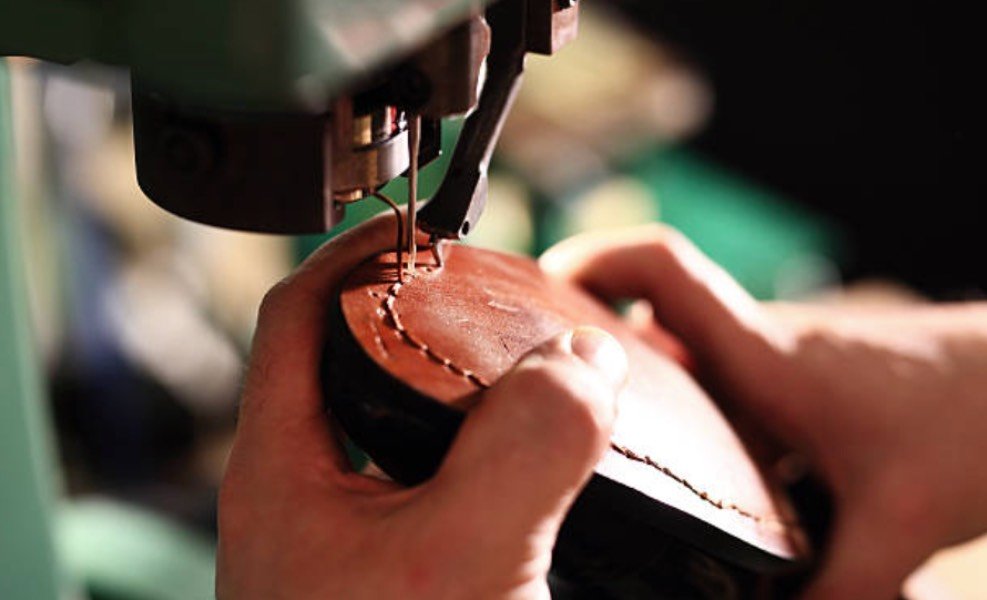
3. Key Stages of Footwear Quality Control
Manufacturing premium footwear relies heavily on systematic quality management. Every production step demands strict oversight, from cosmetic appearance to structural performance, so finished shoes boast attractive aesthetics while meeting daily wear standards for durability and comfort. Below are the four core stages of footwear quality inspection.
3.1 Visual Inspection
Visual inspection is the fundamental, most straightforward quality check for cosmetic and manufacturing flaws.
- Stitching defects: Skipped stitches, broken threads, uneven seams
- Scratches / Stains: Surface imperfections formed during production or packaging
- Excess adhesive residue: A common sign of poor bonding workmanship
- Colour variation: Mismatched shades within a shoe pair or production batch
3.2 Size & Pair Consistency Check
Accurate sizing directly impacts wearing comfort and uniform product quality.
- Critical areas: Toe room, heel height and other fit zones
- Size measurement: Compliance with standard dimensional specifications
- Pair symmetry (left & right shoe): Matching length, height and contour
- Last inspection: No deformation or shape distortion
3.3 Structural & Performance Testing
Structural tests evaluate footwear durability and service performance.
- Traction test: Verify robustness of shoelaces and metal hardware
- Peel strength test: Prevent sole separation and delamination
- Flex resistance test: Simulate long-term daily wear cycles
- Abrasion test: Assess outsole service life
3.4 Safety & Functionality Testing
These tests guarantee safe wear and stable functionality without structural failure.
- Wear trial test: Evaluate comfort and real-world wearing performance
- Needle detector scan: Confirm no broken sewing needles or metallic foreign objects remain inside shoes
- Slip resistance test: Measure grip performance on dry and wet ground
- Print adhesion test: Ensure logos and printed graphics do not peel off
These four core inspection stages allow footwear manufacturers to establish a full-range quality control system covering appearance, sizing, structure and safety, ensuring consistent and reliable quality for every single pair prior to shipment.
4. The importance of Quality Control in Footwear Manufacturing
Professional quality control is far more than a single production step; it serves as a vital guarantee of product quality and wear safety. Systematic inspection and testing detect potential defects in advance and optimize shoe structures and performance, strengthening market competitiveness. Its core value lies in three dimensions: wear safety, long-term durability, and brand reputation.
4.1 Guarantee Safe Wear
Shoes endure constant bending, friction and impact during daily walking, running and harsh use. Professional quality inspections effectively flag hazards including weak bonding, insufficient structural strength and material flaws to avoid sole separation, tearing and slip risks.
Peel strength, flex resistance and slip resistance tests guarantee reliable safety for every pair before they reach the market.
4.2 Extend Service Life and Boost Product Performance
Strict quality control cuts premature damage risks while drastically improving functional performance such as abrasion resistance, flexibility and wearing comfort.
Abrasion and flex testing, paired with material performance evaluation, enable manufacturers to optimize outsole formulas and shoe structures. This delivers consistent performance over long-term wear and meets market demand for footwear that balances durability and comfort.
4.3 Boost Brand Credibility and Customer Satisfaction
A mature quality inspection system builds consumer trust. Standardized testing protocols and transparent control processes slash return and complaint rates while maintaining uniform product quality.
This traceable quality management system directly fosters customer loyalty and repeat purchases, acting as a cornerstone for sustainable brand growth.
5. Footwear Quality Control Practices
Effective footwear quality control relies not only on rigorous inspection procedures, but also on the integration of industrial standards, advanced technologies and continuous improvement mechanisms. Scientific testing and systematic management help shoe suppliers drastically cut defect rates, stabilise product consistency and improve customer satisfaction. Three core practices for top-tier quality control are outlined below.
5.1 Standardisation of Quality Control Procedures
Standardised workflows are the foundation of consistent quality and full traceability. Shoe factories generally adopt international quality management systems such as ISO 9001, alongside complete quality control manuals covering three core inspection links:
- Incoming Quality Control (IQC) for raw materials
- In-Process Quality Control (IPQC) during manufacturing
- Finished Quality Control (FQC) for completed footwear
Known as standard quality operation specifications, this framework regulates all production flows and ensures every batch complies with defined quality benchmarks.
5.2 Combination of Automated and Manual Inspection
Pairing automated equipment with manual checks greatly boosts inspection efficiency and accuracy.
- Automated testing: dimensional measurement, material performance tests
- Visual inspection systems: detection of cosmetic flaws like colour mismatch and scratches
- Manual inspection: assessment of fine workmanship and complex structural components (e.g. finishing, pair symmetry)
This human-machine hybrid model delivers comprehensive quality oversight and offsets the limitations of standalone inspection methods.
5.3 Continuous Optimisation and Feedback Mechanisms
Ongoing improvement is critical to sustained quality stability. By systematically tracking and analysing key metrics:
- Customer complaints and product return rates
- Defect reject ratio
- Rework and scrap data
Shoe suppliers can continuously optimize process parameters, upgrade staff operating standards, refine material selection and strengthen supply chain stability. This system aims to reduce production deviations and deliver consistent, fully controlled output.
Conlusion
Professional quality control forms the cornerstone of safety, durability and premium standards within footwear manufacturing. Every stage — from raw material selection and in-process monitoring to visual, sizing and structural inspections — delivers an irreplaceable impact. Systematic quality audits enable manufacturers to efficiently identify material and process defects, mitigating potential hazards including sole delamination, tearing and degraded product performance.
By combining standardised protocols such as ISO 9001, hybrid automated and manual inspection tools, and continuous improvement frameworks, factories can slash defect rates, boost footwear consistency and service life, while building greater brand trust and customer satisfaction.
Premium footwear originates from rigorous, expert quality control; every fine detail reflects a steadfast commitment to product excellence and brand integrity.
For professional quality inspection support, email us at info@youtushoes.com. We will arrange a consultation with an industry inspector boasting over 30 years of footwear expertise.