


Private Label Is Becoming a Strategic Business Decision
For many footwear brands, launching a new collection is no longer simply about creating attractive designs. It is about finding the right balance between product differentiation, manufacturing costs, inventory pressure, quality consistency, and changing customer expectations.
Private label footwear offers an opportunity to achieve this balance. Brands can work with experienced manufacturers to develop products under their own names without having to establish manufacturing facilities or build an entire production system from the ground up.
However, there is a common misunderstanding: private label is often treated as a branding exercise. A manufacturer provides an existing shoe, the buyer adds a logo, and the product enters the market.
This approach may work for a simple market test, but it does not fully explore the potential of private label manufacturing.
A stronger approach is to treat private label footwear as a product development and supply chain strategy. By combining adaptable product designs, shared manufacturing resources, structured quality control, and transparent material information, brands can create distinctive collections while keeping their operations manageable.
The opportunity is particularly relevant in today’s global footwear industry. According to the World Footwear Yearbook 2025, global footwear production reached approximately 23.9 billion pairs in 2024, with Asia accounting for 88% of total production. This scale highlights the importance of manufacturing partnerships, but it also means brands need more than access to production capacity. They need suppliers who can translate commercial requirements into reliable products.
So, how can brands make private label footwear a genuine competitive advantage?
Build a Product Platform Instead of Developing Every Shoe from Zero
One practical way to improve private label development is to adopt a product platform strategy.
Traditional product development often treats every new shoe as a separate project. A new style may require a different sole, upper construction, material combination, and production arrangement. Although this allows considerable creative freedom, it can also increase development complexity and make production planning more difficult.
A product platform takes a different approach.
Instead of starting from zero for every design, brands and manufacturers identify suitable existing components or construction structures that can support several related styles.
For example, a footwear collection might share:
- A common sole platform across several casual shoe designs.
- Similar upper construction methods with different leather or textile options.
- Consistent insole specifications across related products.
- Standardized packaging dimensions where product requirements allow.
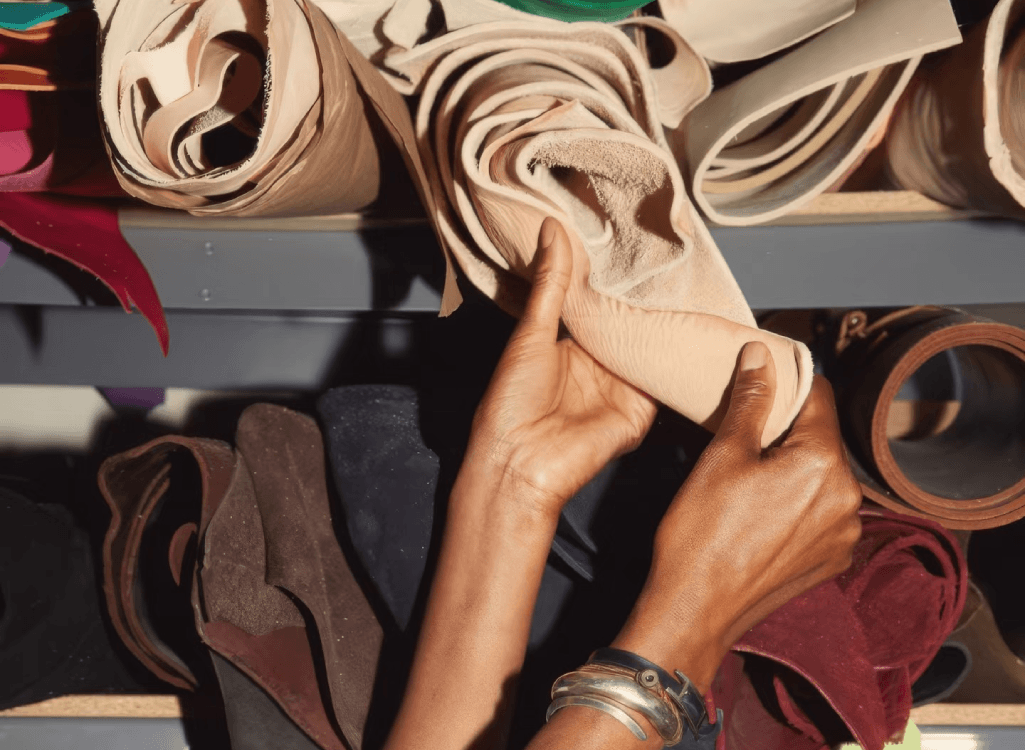
The visual identity can still be different. Changes to the upper pattern, material texture, color combinations, stitching, and branding can create distinct products without requiring every component to be redesigned.
This approach offers two advantages.
First, it makes product development more manageable. Once a particular sole structure or construction method has been tested and approved, it can serve as a reference for future products.
Second, it creates opportunities for better production planning. Shared components may help manufacturers coordinate material purchasing and production schedules across related styles.
This does not mean every shoe should look similar. The purpose is to standardize what customers do not necessarily need to see while preserving the design elements that make a brand recognizable.
For growing footwear brands, this can be a more practical route to building a consistent collection than developing every model independently.
Make Inventory Flexibility Part of the Manufacturing Strategy
One of the biggest challenges for footwear brands is deciding how much inventory to commit to before actual market demand becomes clear.
Shoes are particularly complicated because each style may require several colors and sizes. Even a relatively small collection can quickly create a large number of individual stock-keeping units (SKUs).
For example, a collection with four styles, three colors per style, and six sizes per color already contains 72 product variations.
The difficulty is not simply the total number of pairs. It is how those pairs are distributed across different product variations.
A practical solution is to use a phased development and ordering strategy.
Phase One: Validate the product concept.
Start with a manageable number of styles and carefully selected color options. Use samples to evaluate appearance, construction, comfort, and the suitability of the product for the target customer.
Phase Two: Prioritize commercially important variations.
Rather than introducing every possible color and material combination, focus on the options that best represent the brand and its intended market position.
Phase Three: Plan repeat production.
Once a product has demonstrated market acceptance, discuss repeat orders, material availability, and production scheduling with the manufacturer.
This approach does not guarantee lower costs or eliminate unsold inventory. Small production runs can have higher unit costs because development and setup expenses are distributed across fewer pairs.
However, it can help brands make more informed commitments and avoid introducing unnecessary product variations too early.
Manufacturers should also explain how their minimum order quantities are calculated. MOQ may depend on material purchasing requirements, color selection, production processes, logo application, and packaging—not simply the number of pairs in an order.
The key is to discuss these factors before finalizing the collection.
Treat the Approved Sample as a Technical Reference, Not Just a Visual Example
A shoe sample is often viewed as the final opportunity to check whether a design looks right.
In professional footwear development, its role should be much broader.
An approved sample should establish the product specifications that both the brand and manufacturer will use during production.
This includes:
- Upper material type, thickness, and color.
- Lining and insole materials.
- Outsole material and construction.
- Stitching details and finishing requirements.
- Logo position, dimensions, and application method.
- Fit expectations and size specifications.
- Packaging and labeling requirements.
Why does this matter?
A photograph can show the general appearance of a shoe, but it cannot fully communicate material properties, construction details, or fit expectations.
For example, two leather materials may look similar in photographs but differ in thickness, flexibility, surface finish, and performance. If these differences are not clearly documented, the production result may not match the buyer’s expectations.
A more reliable process is to establish a product specification sheet alongside the approved sample.
The brand and factory should also agree on which changes require renewed approval. A change in leather supplier, outsole material, construction method, or other important component should not be treated as an insignificant production adjustment.
Quality management should continue after sample approval. Incoming material checks, in-process inspections, and finished-product inspections help identify problems at different stages rather than waiting until the entire order is completed.
For larger or recurring orders, brands can also discuss statistical acceptance sampling. ISO 2859-1 provides internationally recognized sampling schemes for lot-by-lot inspection. The appropriate inspection plan and acceptance criteria should be agreed upon according to the product, order, and quality risks.
In short, a sample should become the foundation of a repeatable quality system.
Product Traceability Is Becoming Part of Brand Value
Consumers increasingly encounter sustainability claims when shopping for footwear. Yet statements such as “eco-friendly materials” or “responsibly manufactured” are not enough to demonstrate what makes a product environmentally or socially responsible.
Brands need reliable information behind their claims.
This is especially important because footwear is made from multiple components. A single shoe may combine leather, textiles, rubber, foam, adhesives, metal accessories, and synthetic materials.
Understanding the origin and characteristics of these components requires cooperation between manufacturers and their suppliers.
The European Commission has taken steps toward more consistent environmental assessment in the apparel and footwear sectors. On June 25, 2025, it announced the Product Environmental Footprint Category Rules (PEFCR) for apparel and footwear. These rules provide a common scientific approach to evaluating environmental impacts across the product life cycle, including raw material extraction, manufacturing, logistics, use, and end-of-life.
This development offers an important lesson for private label brands: sustainability should be considered during product development, not added later as a marketing message.
A practical starting point is to request and organize material information for each product.
For example:
- What is the main material used in the upper?
- What materials are used in the lining and insole?
- What is the composition of the outsole?
- Can suppliers provide relevant material documentation?
- Are restricted-substance requirements clearly communicated?
- Can the manufacturer identify the source of key materials?
Brands selling into the European Union should also pay attention to footwear labeling requirements. EU rules require footwear labels to identify the materials used in the upper, lining and insole, and outer sole, using the prescribed material categories.
The EU Ecolabel criteria for footwear also address areas including raw material sourcing, emissions, hazardous substances, durability, and labor-related considerations.
Not every private label brand needs to pursue an environmental label immediately. However, building reliable product information from the beginning can make future compliance and sustainability work more manageable.
Transparency is not just a regulatory consideration. It can also help brands communicate product value with greater confidence.
Choose a Manufacturing Partner Based on Development Capability, Not Price Alone
A low quotation may appear attractive, especially when a brand is launching its first footwear collection.
However, the quoted unit price does not necessarily reflect the total cost of bringing a product to market.
Brands should also consider sample development, material sourcing, tooling, packaging, quality inspections, shipping arrangements, and the possibility of production adjustments.
More importantly, they should evaluate how well a manufacturer supports the development process.
A capable manufacturing partner should be able to:
Understand the target market. Different customers have different expectations for materials, construction, styling, and retail prices.
Explain technical limitations. Not every design can be manufactured efficiently with every material or construction method. An experienced factory should identify potential problems before production.
Support material selection. Material choices affect not only appearance but also comfort, durability, cost, and production feasibility.
Maintain communication. Sample comments, specification changes, production updates, and quality issues should be communicated clearly.
Support repeat orders. Maintaining consistent specifications and production references is important when a successful style returns in a later season.
Supply chain responsibility should also be part of supplier evaluation. The OECD’s Due Diligence Guidance for Responsible Supply Chains in the Garment and Footwear Sector provides a framework for identifying, addressing, and reporting potential negative impacts involving workers, human rights, and the environment.
This means that choosing a manufacturer should involve more than comparing factory quotations. Brands should understand the supplier’s production capabilities, sourcing practices, communication standards, and approach to responsible business conduct.
Turn Private Label into a Long-Term Product Partnership
The most valuable private label relationships are not built around individual purchase orders. They develop through continuous cooperation.
A successful first collection provides a foundation for the next one. The manufacturer becomes familiar with the brand’s preferred materials, construction methods, fit expectations, and quality requirements.
This knowledge can make future development more efficient.
For example, instead of repeating every discussion from the beginning, both parties can work from established product specifications and previous sample records.
They can also review production feedback, identify recurring quality issues, and make improvements before the next season.
Brands should therefore establish regular communication with their manufacturing partners, especially when introducing new materials, changing designs, or planning repeat production.
The objective is not to remove every possible production challenge. It is to build a working process that identifies problems early and provides a clear way to solve them.
The Future of Private Label Is About More Than Customization
Private label footwear offers brands a practical way to enter or expand within the footwear market. But its long-term value depends on how well the business manages product development, production planning, quality, and supply chain information.
The next stage of private label manufacturing is not simply about putting a different logo on an existing shoe.
It is about creating a product system that allows brands to maintain their identity while making better use of manufacturing resources.
A well-planned product platform can simplify development. A phased ordering strategy can support more careful inventory decisions. A documented approval process can improve quality consistency. Reliable material information can strengthen transparency and prepare brands for changing market requirements.
For footwear brands looking to grow internationally, the right manufacturing partnership can provide much more than production capacity. It can become an important part of the brand’s ability to develop products, respond to market needs, and compete over the long term.
The real advantage of private label footwear is not how quickly a brand can put its name on a shoe. It is how effectively that brand can turn an idea into a reliable, distinctive, and repeatable product.
References and Further Reading
- World Footwear (2025). The World Footwear Yearbook 2025. Global footwear production and trade statistics for 2024.
https://www.worldfootwear.com/news/the-world-footwear-yearbook-2025/10794.html - European Commission (2025). New EU rules for measuring environmental impact of clothes and shoes.
https://environment.ec.europa.eu/news/new-eu-rules-measuring-environmental-impact-clothes-and-shoes-2025-06-25_en - European Union. Footwear Label – Your Europe. Footwear material labeling requirements for products sold in the EU.
https://europa.eu/youreurope/business/product-rules-compliance/textiles-and-footwear/footwear-label/indexamp_en.htm - European Commission. EU Ecolabel – Clothing and Textiles. Footwear environmental criteria and certification information.
https://green-forum.ec.europa.eu/green-business/eu-ecolabel/product-groups-and-criteria/clothing-and-textiles_en - OECD (2018). OECD Due Diligence Guidance for Responsible Supply Chains in the Garment and Footwear Sector. OECD Publishing.
https://doi.org/10.1787/9789264290587-en - International Organization for Standardization (2026). ISO 2859-1:2026 – Sampling procedures for inspection by attributes.
https://www.iso.org/standard/2859-1