


Footwear Trends in 2027: How Footwear Brands Can Turn Product Longevity into a Competitive Advantage
A Successful Product Should Do More Than Sell Once
Every footwear brand wants its next collection to attract attention. New silhouettes, interesting textures, fresh colours, and innovative details can all help a product stand out. But there is a question that deserves just as much attention:
What makes a customer want to buy from the same brand again?
For independent footwear brands and established fashion companies alike, the answer is rarely just another seasonal trend. Customers also care about how shoes feel after a full day of walking, whether their bags work in everyday situations, and whether the products maintain their appearance after months of use.
This creates an interesting opportunity for footwear businesses in Footwear Trends 2027. Instead of competing only through new designs, brands can build their collections around a more sustainable commercial principle: design products that customers want to keep using, not just products they want to buy.
This does not mean every shoe needs to look timeless. It means that product development should consider the entire customer experience, from the first purchase to long-term use.
Here are five practical ways brands can turn this idea into a stronger product and manufacturing strategy.
Move from Trend-Driven Design to Customer-Use-Driven Design
Fashion trends are important. They help brands understand changing preferences and identify new product opportunities.
For 2027, industry forecasting has highlighted several interesting directions, including comfort-focused footwear, tactile materials, modular details, oversized shoulder bags, elongated silhouettes, and multifunctional designs.
These ideas offer useful inspiration, but a trend alone does not prove commercial demand.
For example, a fashionable shoe may attract attention online but struggle to generate repeat purchases if its fit is uncomfortable.
Brands should therefore introduce a customer-use assessment before approving a new design.
Consider three questions:
- When will customers use this product? Is it intended for commuting, office wear, travel, special occasions, or everyday activities?
- What problem does it solve? Does it provide better support, easier storage, improved flexibility, or greater styling versatility?
- Will customers still find it useful after several months? Can the design remain relevant beyond its initial launch?
For footwear, this could mean developing a sneaker with a more comfortable collar, a practical outsole, and materials suitable for frequent wear.
The goal is not to remove creativity from fashion. It is to connect creative design with real customer behaviour.
A strong collection should have visual appeal, but every product should also have a clear reason to exist.
Make Comfort a Measurable Product Feature
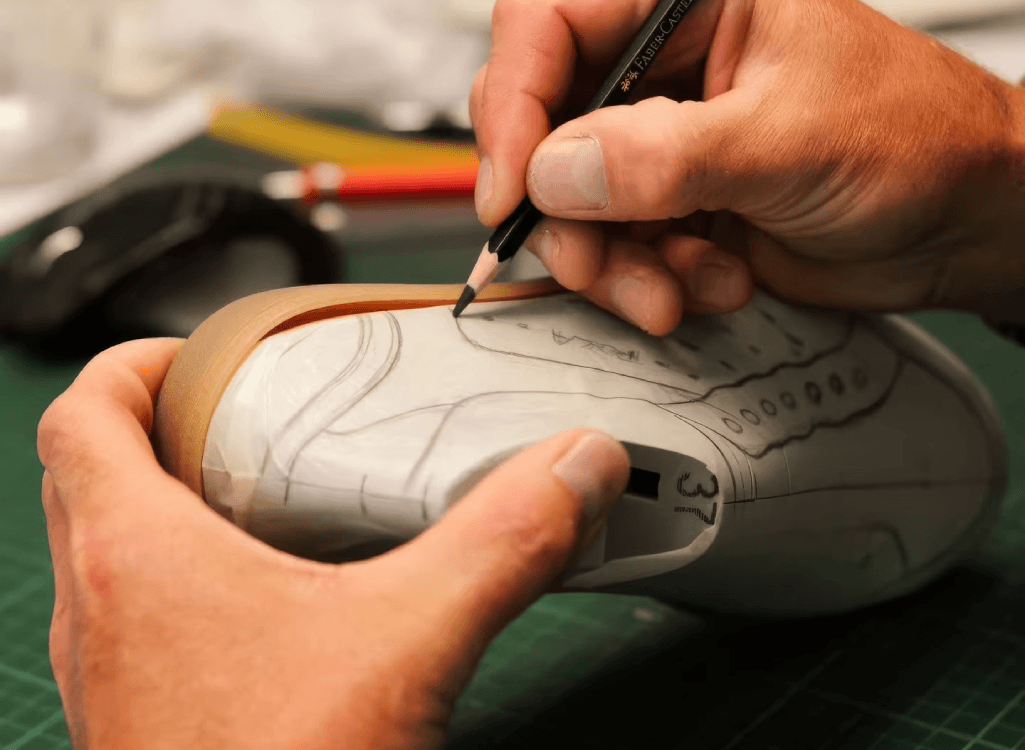
Comfort is often used in footwear marketing, but it should be treated as a technical development requirement rather than a promotional description.
A shoe’s comfort depends on several interacting factors, including its last shape, internal volume, cushioning, flexibility, weight, outsole construction, and fit across different foot shapes.
This is particularly important when brands expand from a single footwear category into several product types.
A comfortable casual sneaker and a comfortable dress shoe may require very different construction decisions. Simply adding a soft insole does not automatically solve problems caused by poor fitting or unsuitable shoe geometry.
Brands can improve development by assessing comfort through a structured process:
Last and fit evaluation
The last should reflect the intended customer and footwear category. Toe-box space, heel fit, instep volume, and size grading all deserve attention.
Material performance
Uppers should provide an appropriate balance of flexibility, support, breathability, and resistance to deformation.
Sole construction
The outsole and midsole should be selected according to the intended use. A lightweight casual shoe, for example, has different requirements from a shoe designed for extended walking.
Wear testing
Samples should be tested under realistic conditions. Feedback should cover pressure points, heel movement, slipping, flexibility, and overall comfort after extended wear.
This process can also be applied to bags.
A large handbag should be evaluated for strap width, handle attachment, weight distribution, and comfort when carrying everyday items.
The important point is that comfort should be verified through product testing rather than assumed from the appearance or material description.
For brands, this creates a more convincing product proposition: instead of simply saying a shoe is comfortable, they can explain the design features and testing process behind that claim.
Design for Repairability Before the Product Reaches the Factory
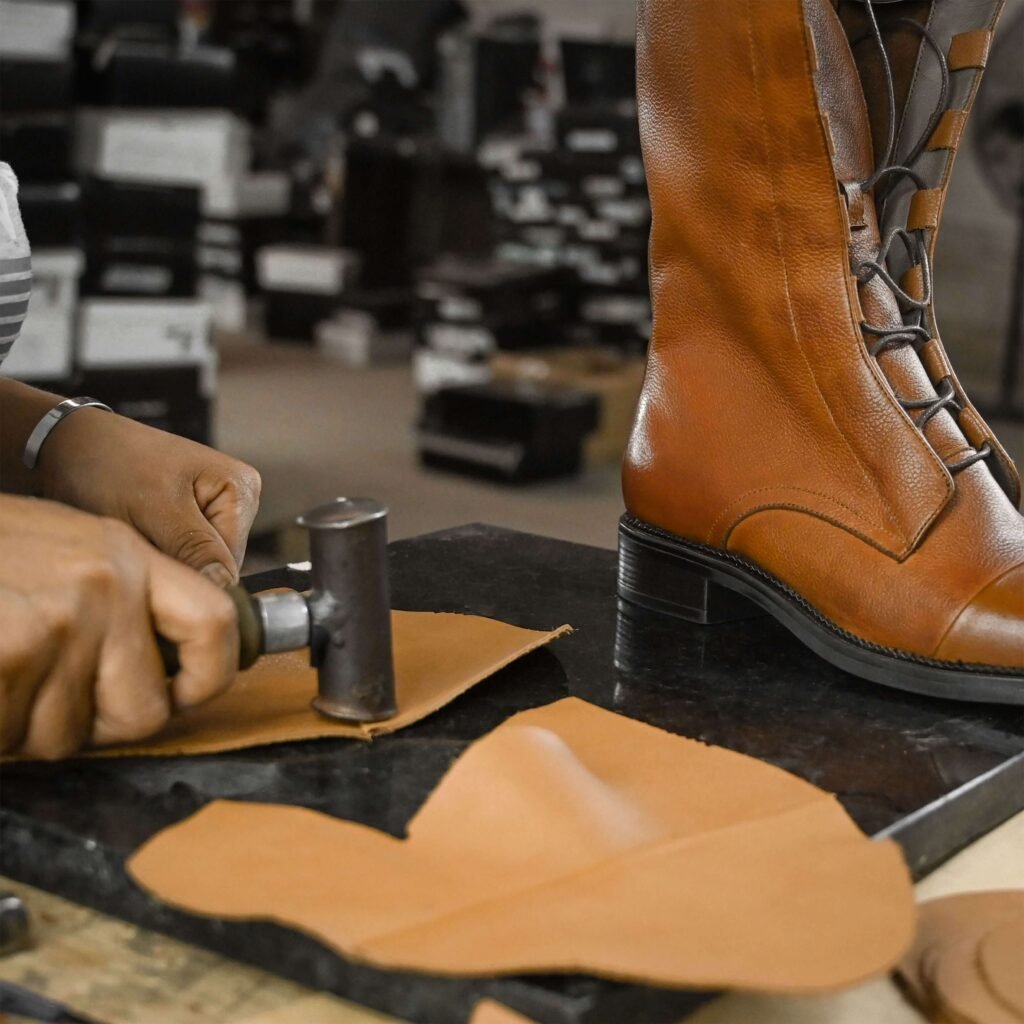
Repairability is often considered an after-sales issue. In reality, it starts during product development.
The construction of a shoe determines how easily its components can be inspected, replaced, or repaired. The same principle applies to handbags, particularly handles, zippers, straps, buckles, and other frequently used components.
Research published in Waste Management & Research in 2020 reviewed footwear life cycles and end-of-life management. It identified the environmental challenges associated with footwear waste and discussed options including reuse, recycling, and improved end-of-life management.
The research highlights an important design consideration: footwear is a complex product made from multiple materials and components, which can make recovery and recycling difficult.
Brands do not need to redesign their entire collections to respond to this challenge.
Practical improvements can include:
- Using replaceable insoles where technically appropriate.
- Selecting construction methods that allow sole repair or replacement.
- Making detachable straps and handles easier to replace.
- Choosing standardised hardware where suitable.
- Avoiding unnecessary combinations of permanently bonded materials when simpler construction can achieve the same performance.
However, repairability must be balanced against safety, durability, production cost, and product aesthetics.
For example, a detachable component should not become a weak point during normal use. A repairable sole must still maintain reliable bonding and structural performance.
The best solution is not the most complicated modular design. It is the design that makes common repairs practical without compromising the product.
This can also create opportunities for brands to offer replacement components, repair services, or extended product support.
Such services can strengthen customer relationships while helping products remain useful for longer.
Choose Materials Based on Performance, Not Just Appearance
Material selection is one of the most important decisions in footwear and handbag development.
A material may look attractive in a sample, but its real performance depends on how it behaves during production and daily use.
For example, a soft leather may create a premium appearance but require additional reinforcement in certain bag structures. A lightweight synthetic upper may improve flexibility but need testing for abrasion resistance and deformation. A woven material may create an interesting visual effect but introduce challenges in edge finishing and structural stability.
This is why brands should evaluate materials through several dimensions:
| Material evaluation | What brands should consider |
|---|---|
| Appearance | Colour, texture, surface finish |
| Durability | Abrasion, tearing, deformation |
| Comfort | Flexibility, breathability, skin contact |
| Manufacturing | Cutting, stitching, bonding, finishing |
| Maintenance | Cleaning, storage, repair |
| Environmental impact | Material origin, processing, useful life, end-of-life options |
There is also a growing need for more reliable environmental information.
In June 2025, the European Commission announced Product Environmental Footprint Category Rules (PEFCR) for apparel and footwear. These provide a science-based methodology for assessing environmental impacts across the product life cycle, from raw material extraction and manufacturing to distribution, use, and end of life.
An important implication is that brands should avoid assuming that one material is automatically more sustainable than another simply because it is described as natural, recycled, or biodegradable.
The overall impact depends on multiple factors, including material production, manufacturing processes, product performance, and disposal.
For footwear brands, the practical approach is to ask suppliers for material specifications and relevant test documentation, then evaluate materials against the actual requirements of the product.
A material that performs well, lasts longer, and fits the intended manufacturing process may be a better choice than one selected purely for its marketing appeal.
Develop Collections Around Adaptable Product Platforms
One of the biggest challenges for independent brands is developing too many completely different products within a limited budget.
Every new shoe construction may require additional sampling, pattern development, material sourcing, testing, and production preparation.
A more efficient approach is to create a product platform.
This means developing a proven base design that can support several variations without rebuilding the entire product from the beginning.
For example, a footwear brand could develop one well-tested loafer construction and introduce variations through:
- Different leather textures.
- Seasonal colour combinations.
- Alternative decorative hardware.
- Updated lining materials.
- Minor adjustments to heel or outsole details.
This strategy has several advantages.
- Lower development complexity: Existing patterns and construction knowledge can reduce repeated development work.
- Stronger brand recognition: A consistent product shape can become part of the brand’s visual identity.
- More controlled inventory: Brands can test selected variations rather than introducing many unrelated products at once.
- Faster product improvement: Feedback from previous collections can be applied to the next version.
However, product platforms should not become an excuse for releasing repetitive products. Each variation still needs a clear customer benefit.
The objective is to maintain a recognisable design foundation while allowing meaningful improvements in materials, function, and appearance.
Build a Manufacturing Partnership Around Product Performance
Even the strongest product concept can fail if the manufacturing process cannot deliver consistent results.
This is why product longevity and adaptability should be discussed with manufacturers before bulk production.
A manufacturing partner should be able to evaluate more than the appearance of a design. It should understand the relationship between construction methods, material properties, component performance, and production consistency.
Before approving a new product, brands should discuss:
- Construction feasibility: Can the proposed design be manufactured consistently at the required order quantity?
- Material compatibility: Are the selected upper, lining, sole, hardware, and adhesive suitable for one another?
- Quality testing: Which tests are appropriate for the product’s intended use?
- Repair considerations: Can frequently damaged components be replaced or repaired?
- Production consistency: Can the approved sample be reproduced accurately in bulk production?
For brands selling in Europe, regulatory requirements should also be considered during development.
The EU footwear industry framework includes material labelling requirements under Directive 94/11/EC, while applicable REACH restrictions govern certain chemical substances.
The Ecodesign for Sustainable Products Regulation (EU) 2024/1781 also establishes a framework for future product-specific ecodesign requirements and Digital Product Passports. These requirements are being introduced progressively, so brands should monitor the rules applicable to their product categories rather than assume that all footwear already requires a Digital Product Passport.
Manufacturers that can organise material information, testing records, and product specifications can make future compliance work easier.
The ideal relationship is collaborative: the brand defines the customer experience, while the manufacturer helps translate that experience into a product that can be produced reliably.
A Simple Framework for Your Next Collection
Before investing in a new footwear or handbag collection, brands can use this five-part assessment:
| Development question | What a good answer looks like |
|---|---|
| Customer value | The product solves a clearly identified customer need |
| Product performance | Comfort, durability, and function can be tested |
| Material suitability | Materials meet both design and performance requirements |
| Manufacturing feasibility | Construction and MOQ match the brand’s resources |
| Long-term relevance | The product has value beyond a short seasonal trend |
Brands can also introduce a small pilot process:
- Select one or two promising designs.
- Develop prototypes with the manufacturing partner.
- Conduct fit, wear, and functional testing.
- Collect feedback from target customers.
- Improve the design before bulk production.
- Review customer feedback and product performance after launch.
This is not a guarantee of commercial success. It is a way to reduce avoidable development mistakes before committing more resources.
The Next Competitive Advantage Is a Product Worth Keeping
The future of footwear is not simply about creating more fashionable shoes or more attractive handbags.
It is about understanding why customers use products, what makes them comfortable, how they perform over time, and whether they continue to deliver value after the initial purchase.
For brands, this creates a different way to think about innovation.
A modular detail, a better-fitting last, a stronger handle attachment, a more carefully selected material, or an improved construction method may not look as dramatic as a completely new silhouette. Yet these decisions can have a meaningful impact on product quality and customer experience.
In a market where trends change quickly, brands that combine creative design with practical product development can build a stronger foundation for growth.
The next successful collection should not only answer the question, “What will customers buy this season?”
It should also answer a more important one: What will make customers choose our brand again?
That is where long-term product value begins.