


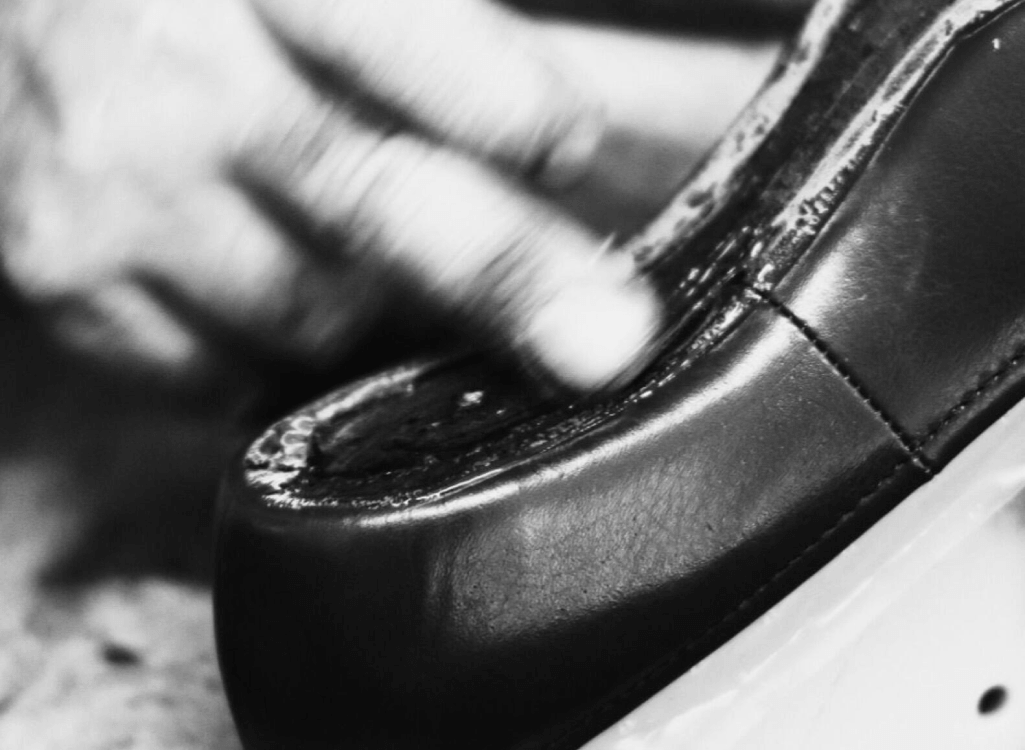
Why the next generation of leather shoes development must connect product design, performance testing, cost control, and supply chain transparency.
A Good-Looking Sample Is Only the Beginning
A leather shoe can look excellent in a sample room and still fail in the market.
The upper may develop cracks after repeated wear. The sole may begin to separate from the shoe. A leather finish that looks consistent on one sample may appear noticeably different across a production batch. Even when the finished product meets the original design brief, its cost, comfort, or durability may fall short of customer expectations.
These problems are not always caused by poor workmanship. In many cases, they begin much earlier, when brands make product decisions without clearly defining how the finished shoe should perform.
Traditional leather shoes development often follows a familiar sequence: design, material selection, pattern making, sampling, approval, and mass production. This process remains essential, but it leaves an important question unanswered:
How can a brand prove that a leather shoe will perform as intended before committing to large-scale production?
The answer is to treat footwear development as a process of measurable product validation, rather than simply a journey from sketch to finished sample.
For brands competing in international markets, this approach offers a practical way to reduce avoidable production risks, manage product costs, improve consistency, and build more credible quality and sustainability claims.
Start With a Performance Brief, Not Just a Design Brief
A design brief usually describes a shoe’s appearance. It may specify the leather type, color, heel height, outsole material, stitching details, and target retail price.
These details are necessary, but they do not fully define product quality.
A more useful development brief also explains what the shoe must do during actual use.
For example, a leather loafer intended for office wear has different performance priorities from a hiking boot or a fashion heel. The loafer may require consistent fit, resistance to surface scuffing, and reliable sole attachment. A hiking boot may need more demanding water-resistance, flexing, and abrasion performance. A high heel requires particular attention to heel attachment and structural stability.
Brands should translate these differences into measurable requirements before sampling begins.
A practical performance brief can cover five areas:
- Fit and comfort: Last dimensions, toe-box space, heel retention, and the intended wearing conditions.
- Material performance: Flex resistance, surface durability, colorfastness, and water-related performance where relevant.
- Construction strength: Sole adhesion, stitching integrity, heel attachment, and component stability.
- Appearance consistency: Acceptable variation in leather grain, color, texture, and finishing.
- Commercial requirements: Target manufacturing cost, delivery schedule, expected product life, and repair options.
These requirements should be specific enough to guide decisions. “High-quality leather” is too vague. A more useful specification identifies the leather category, thickness range, finish, relevant test methods, and acceptable results.
International standards provide a foundation for this work. For example, ISO 24265:2020 specifies a method for testing the resistance of footwear upper materials to rubbing with a rubber strip. The method is designed to simulate a form of contact that can occur during wear.
The standard does not guarantee that a shoe will last for a particular number of years. It provides a defined way to assess one aspect of material performance.
That distinction matters. Testing should support a product decision, not become a marketing promise that the evidence cannot justify.
Test the Whole Shoe, Not Just Its Individual Materials
A common development mistake is to evaluate materials separately and assume that good individual components will automatically produce a good finished shoe. — They will not.
A leather upper may perform well in a laboratory test, while the completed shoe develops cracks around a flex point. A sole compound may have suitable abrasion resistance, but the bond between the sole and upper may be inadequate. A soft lining may improve the initial feel of the shoe but create problems with friction or shape retention.
Footwear is a system. Its performance depends on how materials, components, and construction methods work together.
This is why product validation should take place at more than one level.
Level One: Material Testing
Test leather and other materials before committing them to production.
Depending on the product, relevant checks may include thickness, tensile or tear strength, colorfastness, flex resistance, and resistance to rubbing.
The aim is to identify unsuitable materials before they enter the manufacturing process.
Level Two: Component Testing
Evaluate components such as insoles, heel assemblies, and outsole materials where their individual performance presents a significant risk.
For example, the requirements for an outsole used in wet outdoor conditions will differ from those for a dress shoe intended mainly for indoor environments.
Level Three: Finished-Shoe Testing
Test the assembled shoe to examine interactions that material testing cannot reveal.
SATRA’s published footwear test methods include assessments of whole-shoe flexing resistance and sole-bond strength. These methods can help manufacturers and brands investigate construction-related failure risks.
The appropriate tests depend on the shoe category, intended use, target market, and applicable requirements. Not every shoe needs every test.
A more efficient strategy is to identify the product’s most likely failure points and select tests accordingly.
For a leather dress shoe, the development team might prioritize sole adhesion, flexing performance, heel stability, and upper appearance after repeated movement. For a waterproof boot, water penetration and flexing under relevant conditions may deserve greater attention.
The goal is not to collect the largest number of test reports. It is to generate enough reliable evidence to make informed product decisions.
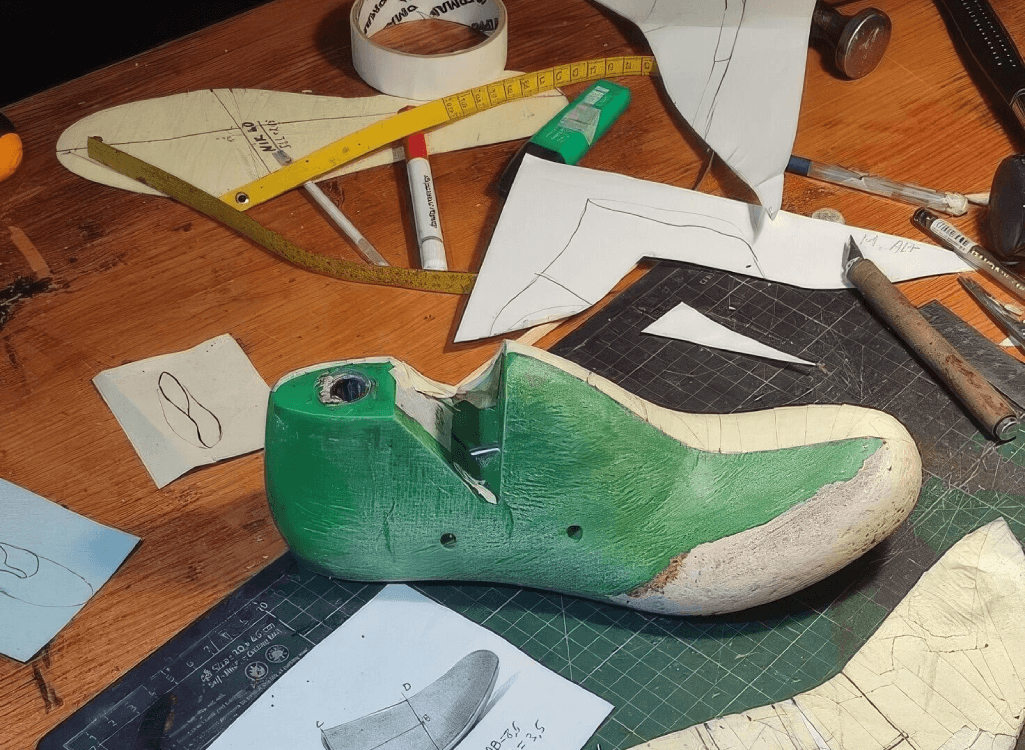
Make Sample Approval a Controlled Decision
Sample approval is often treated as a visual judgment. A buyer examines the leather shoes, checks the details, and decides whether it looks right.
Visual approval is important, but it should not be the only basis for moving into mass production.
A sample represents a particular combination of materials, components, patterns, and production settings. If any of these change later, the approved sample may no longer accurately represent the product that reaches the customer.
Brands can address this problem by establishing a formal approval record.
For each model, the record should identify:
- The approved last, pattern, and size specifications.
- The leather supplier, material description, color, and finish.
- The outsole, lining, insole, adhesives, and other critical components.
- The agreed construction method.
- The relevant test results and acceptance criteria.
- The approved reference sample and acceptable visual tolerances.
- The procedure for reviewing and approving material or construction changes.
This creates a clear baseline for production.
Suppose a supplier proposes changing the adhesive used to attach an outsole. The change may appear minor, but it could affect bond strength, processing conditions, or performance under heat and humidity.
Under a controlled approval system, the change triggers a review of the relevant risks. The team can then determine whether additional testing is needed before the revised construction enters production.
The same principle applies to leather substitutions, changes in finish, and modifications to sole compounds.
This approach does not eliminate manufacturing variation. Instead, it makes changes visible and gives the brand a defined process for evaluating their consequences.
For international brands working with multiple suppliers or factories, that consistency can be especially valuable.
Measure the Cost of Failure, Not Just the Cost of Manufacturing
When comparing manufacturing partners, brands often begin with the unit price.
Price matters, but the lowest quoted price does not necessarily produce the lowest total cost.
A more complete calculation includes development expenses, material waste, inspection costs, rework, rejected products, freight, warranty claims, and other costs associated with quality failures.
Consider a hypothetical order of 5,000 pairs.
If one production plan has a manufacturing cost of $40 per pair, its initial product cost is $200,000. If preventable defects affect 4% of the order, 200 pairs require additional attention.
The direct cost depends on the nature of the defect. Some pairs may be repairable; others may need replacement or rejection. Additional inspection, sorting, transportation, and customer-service costs may also arise.
This example illustrates the calculation method, not an industry-wide defect rate. Actual figures must come from the brand’s own production records.
A useful comparison is:
Total landed cost = Manufacturing cost + Logistics and duties + Quality-related costs + Other attributable costs.
Brands should also examine the cost of development changes.
A pattern adjustment made before production may require limited work. The same adjustment discovered after thousands of pairs have been assembled could lead to substantial rework or inventory loss.
For this reason, early testing and clear approval criteria are not simply quality-control expenses. They are tools for managing financial risk.
A practical starting point is to track four indicators across each production run:
- First-pass yield: the proportion of products passing inspection without rework.
- Defect rate by category: the frequency of specific failures.
- Rework and rejection cost per order.
- Repeat defect rate across successive production runs.
These indicators help brands distinguish between an isolated problem and a recurring process weakness.
Over time, they also provide a more objective basis for comparing suppliers than quotations alone.
Treat Sustainability as a Product Engineering Question
Sustainability is increasingly relevant to footwear development, but it is easy to approach it too narrowly.
Choosing a material described as sustainable does not automatically make the finished shoe environmentally preferable. Material production, chemical processing, transportation, assembly, product life, and end-of-life treatment can all influence the overall result.
A peer-reviewed study by Marta Rossi and colleagues, published in the International Journal of Sustainable Engineering in 2021, applied life cycle assessment to a classic men’s leather shoe supply chain.
The researchers identified significant environmental pressure associated with upstream activities, including slaughtering and tanning, and highlighted the use of cotton in upper manufacturing, assembly, and finishing as another relevant area.
Their analysis also examined alternative scenarios involving transportation, material substitution, and purchasing decisions. Under the combined scenarios studied, the researchers estimated an environmental impact reduction of approximately 30%.
This result should be interpreted carefully. It came from a specific shoe supply chain and a defined set of assumptions. It is not a universal reduction rate for all leather footwear.
However, the study supports an important development principle: environmental improvements require examining the product and its supply chain together.
First, map the main materials and processes. Identify the leather, lining, outsole, adhesives, packaging, and major production stages.
Second, investigate the most relevant impact areas. Depending on the product and available data, these may include leather processing, chemical management, energy use, transportation, material waste, and product durability.
Third, compare realistic alternatives. A material substitution should be evaluated against the performance requirements of the finished shoe, not just its environmental profile in isolation.
Finally, document the evidence. Record supplier information, material specifications, available certifications, and the basis for any environmental claims.
Durability deserves particular attention. A shoe that remains functional for longer may avoid premature replacement, but this benefit depends on actual service life, maintenance, and what product it replaces.
Brands should therefore avoid assuming that leather footwear is inherently more sustainable than every alternative. The defensible approach is to compare specific products using clearly defined boundaries and reliable data.
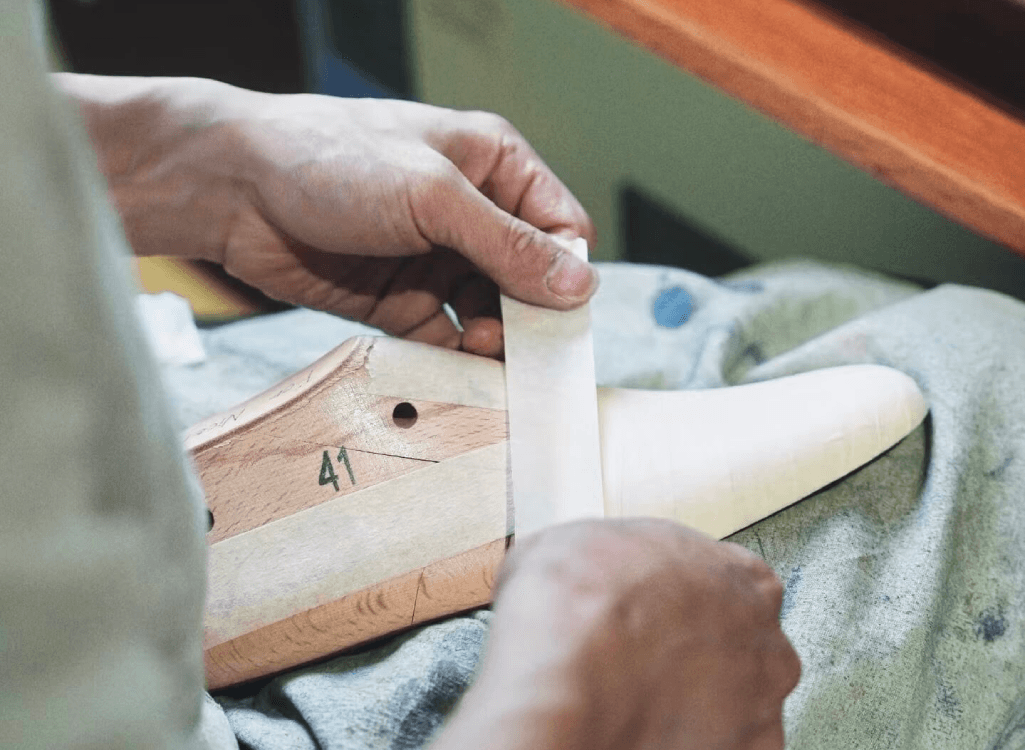
Build Traceability Into Product Development
Traceability is often discussed as a supply chain or compliance issue. It can also improve everyday product development.
When a brand knows which materials, components, suppliers, and production batches went into a particular model, it can investigate quality problems more quickly.
Without this information, a complaint about peeling, discoloration, or sole separation may require a broad investigation across multiple production runs.
With organized records, the team can narrow the investigation to the relevant material lot, construction change, or manufacturing period.
A simple traceability system does not need to begin with expensive software.
A structured digital record for each model can include:
- Product and model identification.
- Material suppliers and available batch references.
- Approved specifications and sample records.
- Test reports and inspection results.
- Manufacturing dates and production lot numbers.
- Approved changes and corrective actions.
- Applicable compliance documents.
The key is to keep these records consistent and accessible to the people who need them.
This approach also prepares brands for a regulatory environment in which product information and environmental performance are receiving greater attention.
The European Union’s Ecodesign for Sustainable Products Regulation, Regulation (EU) 2024/1781, establishes a framework for ecodesign requirements and digital product passports. The specific information and obligations depend on the applicable product rules and implementing measures.
Brands should not assume that every footwear product is already subject to the same digital passport requirements. They should monitor the rules relevant to their products and target markets.
Even before specific obligations apply, organized product data can improve supplier communication, quality investigations, and preparation for future information requests.
Design for Repair Before the First Pair Is Made
One final opportunity is often overlooked during early development: repairability.
Many footwear decisions influence whether a shoe can be repaired economically after purchase.
Sole construction, component availability, material compatibility, and the accessibility of worn parts can all affect repair options.
For example, a shoe designed around a replaceable outsole may offer a practical repair route if the construction, materials, and service arrangements support replacement. However, not every sole construction is suitable for resoling, and repairability should never be assumed from appearance alone.
Brands can begin by asking three questions during product development:
Which components are most likely to wear out first? — The answer will depend on the shoe’s intended use. Outsoles, heel tips, insoles, and certain upper components may deserve particular attention.
Can these components be replaced without damaging the rest of the shoe? — The development team should consider attachment methods, material compatibility, repair access, and the availability of replacement parts.
Is the repair commercially realistic? — A technically repairable shoe may still be difficult to repair if labor costs are excessive or replacement components are unavailable.
Repairability is therefore both a construction decision and a service decision.
For brands positioning themselves around longevity, it can also provide a more concrete proposition than broad claims about timeless design.
The practical approach is to identify the products for which repair offers a genuine benefit, test the repair process, and document what can actually be repaired.
Better Development Creates Better Business Decisions
Successful leather shoes development requires more than attractive design, good materials, and a capable factory.
It requires a clear understanding of how the finished product should perform, how that performance will be verified, and how changes in materials or construction may affect quality, cost, and environmental impact.
Brands do not need to rebuild their entire development process to make progress.
They can start with five practical steps:
- Define measurable performance requirements before sampling.
- Select tests according to the product’s actual risks.
- Establish a controlled approval process for samples and production changes.
- Track quality-related costs alongside manufacturing prices.
- Keep reliable product records and consider repairability from the design stage.
These steps create a stronger link between product design and commercial performance.
They also help brands ask better questions when evaluating manufacturing partners. Instead of asking only how quickly a factory can produce a sample or how low it can quote, brands can ask how product requirements are documented, how failures are investigated, how material changes are controlled, and how production quality is measured.
The next competitive advantage in leather footwear will not come from a single material, machine, or manufacturing location. It will come from making better decisions throughout the product’s development and production life.
A sample proves that a shoe can be made. A well-designed validation process provides stronger evidence that it can be made consistently, meet its intended purpose, and deliver value to the customer.
For footwear brands planning their next collection, that is a more useful starting point than the sample alone.
References and Further Reading
- Rossi, M., Papetti, A., Marconi, M., & Germani, M. (2021). Life cycle assessment of a leather shoe supply chain. International Journal of Sustainable Engineering, 14(4), 686–703.
DOI: 10.1080/19397038.2021.1920643. - International Organization for Standardization (ISO). ISO 24265:2020 — Footwear: Test methods for uppers — Resistance to rubbing using a rubber strip.
Official standard: https://www.iso.org/standard/78250.html - SATRA Technology. Footwear Testing and Research.
https://www.satra.com/footwear/about.php - SATRA Technology. SATRA TM92 — Resistance of footwear to flexing.
https://satradesign.com/test_methods/detail.php?id=70 - European Parliament and Council of the European Union. (2024). Regulation (EU) 2024/1781 establishing a framework for the setting of ecodesign requirements for sustainable products.
Official legal text: https://eur-lex.europa.eu/eli/reg/2024/1781/oj/eng