


Most new footwear brands focus heavily on aesthetics. They spend weeks refining silhouettes, colour palettes and brand storytelling, then send reference images to factories expecting fast, low-cost sampling. In practice, a large number of projects stall at the early development stage. Sample revisions drag on, tooling fees go over budget, fit fails end-user expectations, or the final unit price no longer matches the original retail business plan.
This problem rarely comes from poor design talent. It usually comes from a missing bridge between creative vision and manufacturable product definition. For global footwear brands, whether you are an emerging label, an established brand launching a new sub-collection, or a private label owner expanding into athletic or casual footwear, the decisions made before contacting a factory have a direct impact on lead time, total development cost, MOQ flexibility and long-term reorder stability.
This article explains the core industry logic behind this gap. It focuses on one key argument: successful footwear development does not start when the factory receives your tech pack. It starts when the brand clearly defines commercial positioning, product performance targets, manufacturing boundaries and total project cost structure.
Position First, Design Second — A Common Mistake Brands Keep Repeating
A frequent mistake in footwear development is locking in the shoe shape before defining the end user and usage scenario. A running shoe, a fashion sneaker, a work shoe and a premium leather loafer may all look visually similar at first glance, but they demand very different last geometry, material performance, outsole compound and construction logic.
When a brand only provides reference photos without this context, the factory has to guess. It may select a last that looks close, but does not match the required foot volume, toe spring or heel stability. It may choose a midsole that looks similar, yet fails the cushioning or flex performance the consumer expects. This creates repeated sampling loops, and each extra revision adds time and expense.
A strong pre-development brief should answer a few core questions:
- Who is the target consumer?
- What is the main wearing scenario?
- What retail price band should the final product support?
- Which competitors does the brand want to benchmark against?
- What non-negotiable performance features must the shoe deliver?
These answers are not just marketing notes. They become the decision rules for material grade, construction method, outsole hardness, insole system, packaging level and acceptable tooling investment. Without this baseline, even an experienced factory cannot turn a creative idea into a commercially viable shoe.
Keep The Launch Collection Narrow — Development Budget Is Not Infinite
Footwear development is component-heavy. Every new style may require pattern making, last selection or modification, outsole evaluation, material sourcing, logo tooling, fit testing and sample approval. When a brand launches too many styles at once, limited development resources get spread too thin.
The smarter approach for most global brands is to start with one or two hero styles. These lead styles should represent the brand identity and prove the core product concept in the target market. Secondary styles can follow after the first production cycle, once the brand has confirmed customer feedback, reorder demand and factory performance.
There is another practical benefit: shared components. If multiple styles can use the same outsole, insole, hardware or packaging system, the brand reduces repeated one-time development charges. This also helps maintain consistency across the collection and makes future replenishment easier to manage. For smaller brands with limited first-order volume, this kind of component planning can be the difference between a viable launch and an overstretched project.
Reference Images Are Not Equal To A Technical Specification
Reference images are useful. They communicate direction, style language and visual preference. But they are not a full manufacturing specification.
Many brands believe a factory can directly produce a shoe from a picture. In reality, a photo only shows the outside appearance. It does not reveal the upper layering, stitch density, reinforcement structure, insole system, outsole compound, last shape, grading logic or internal construction. Even when the source shoe comes from another brand, an exact 1:1 reproduction is rarely practical. The original last, moulds and production know-how usually belong to the original manufacturer and are not available in the open market.
This does not mean brands need a perfect, fully completed tech pack before the first factory conversation. Early discussions can start with annotated reference images, rough sketches, material notes and target size range. However, before moving into formal sampling, the brand needs to define critical details:
- Upper material and lining
- Reinforcement areas
- Midsole and outsole material
- Insole type
- Logo application method
- Size range and grading
- Packaging requirements
- Target price and intended market
This transition from “style inspiration” to “manufacturable brief” is one of the most important steps in footwear development.
Know The Difference Between Private Label, ODM And Fully Custom Development
The terms OEM, ODM and private label are often used loosely in the footwear industry. Brands should not rely on these labels alone. They need to understand the actual scope of work.
Private label or semi-custom development usually starts from an existing factory base model. The brand may change colours, materials, branding, lining or some upper details. This route has lower upfront tooling cost and shorter development time, which makes it suitable for market testing.
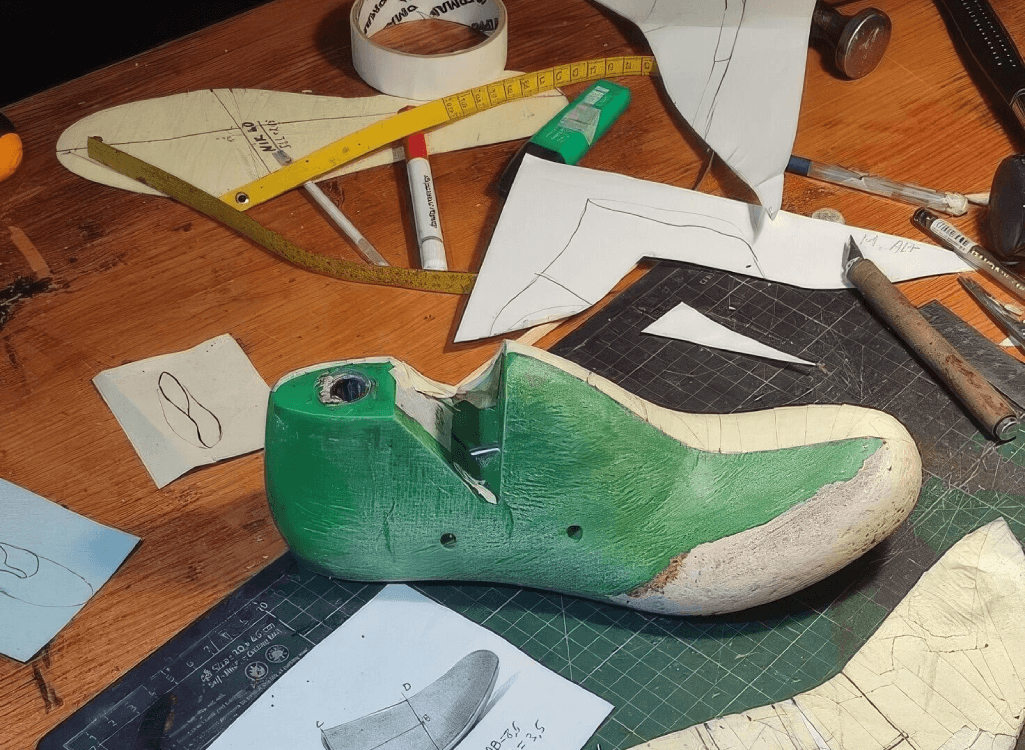
Fully custom development is different. It starts from the brand’s own design concept and may require custom lasts, custom outsole moulds, custom pattern engineering and dedicated branding tooling. This gives the brand stronger product differentiation, but it also brings higher non-recurring engineering cost and longer lead time.
The critical point between OEM & ODM & Private Label is this: the quotation should clearly separate what is included and what triggers extra charges. A brand should confirm whether sample fees cover pattern making, material cost, last adjustment, logo moulds and minor revisions. It should also know whether major changes to upper structure, logo design or outsole mould will be charged separately. Without this clarity, the project can quickly become more expensive than planned.
Build A Full Cost Model — Do Not Only Compare The Per-Pair Price
A common mistake when sourcing footwear internationally is comparing only the per-pair unit price. In real projects, the total cost of a shoe line includes more than bulk production.
The cost structure usually falls into two categories:
- One-time development costs, such as pattern engineering, last modification, outsole moulds, logo tooling, custom box sampling and revision work.
- Recurring production costs, such as upper materials, lining, insole, midsole, outsole, labour, packaging, freight, duties, inspection and compliance testing.
For a first order, the one-time costs can have a major impact on the final break-even point. If the order volume is small, the per-pair cost can rise significantly because fixed development expenses are spread over fewer pairs. This is especially important for emerging brands that want low MOQ but still expect large-volume pricing.
This does not mean small orders are impossible. Many factories can support 200–300 pair trial orders, but the brand should understand the trade-off. Lower volume often means higher unit price, fewer customisation options, or reliance on existing tooling. The brand needs to decide whether the priority is product exclusivity, low trial risk, or best production cost.
Clarify MOQ At The Component Level, Not Just Per Style
MOQ in footwear is more complex than a single number. It may apply per style, per colourway, per material batch, per outsole, per logo tooling, or per custom packaging. A brand may accept a 200-pair MOQ for the style, but later discover that a custom colour, special material or custom shoe box has its own minimum requirement.
Before committing to a project, the brand should ask the factory to explain:
- MOQ per style
- MOQ per colourway
- Size run distribution
- MOQ for custom materials
- MOQ for custom outsole or hardware
- MOQ for custom packaging
- Whether existing moulds or stock components can reduce the threshold
This level of detail prevents surprises during order confirmation. It also helps the brand design a more realistic first production plan.
Compliance Is A Separate Workstream — Do Not Test The Wrong Sample
For global brands selling into regulated markets such as the EU, product compliance cannot be treated as an afterthought. However, there is an important distinction between a development sample and a pre-production sample.
A development sample is mainly used to check workmanship, material look, construction and fit. It helps the brand understand whether the design can be produced and whether the shoe feels right. It is not always the correct sample for final market compliance testing.
For regulated sales, the more meaningful testing is usually based on bulk production materials or a properly approved pre-production sample, because the final legal and retail compliance should reflect the materials that will actually go into the market product. The brand also needs to confirm which standards and test items apply to its specific product category, sales channel and destination market.
Major international third-party laboratories such as SGS, Intertek and SATRA have operations in multiple regions, including China. The testing process can be similar depending on the selected standard and lab protocol. The brand’s responsibility is to define the required test scope, not simply send a prototype to a lab without a clear testing objective.
This approach helps avoid unnecessary cost. Adult casual or athletic footwear does not always carry the same mandatory testing level as children’s footwear or high-risk protective footwear. Still, the brand must confirm the exact requirements based on its own retail platform, customs and market surveillance expectations.
Evaluate The Factory By Process, Not Only By Portfolio
A factory gallery can look impressive, but a beautiful photo portfolio does not prove that the factory understands your development workflow. Global brands should evaluate the partner through process questions.
Useful questions include:
- How does the factory review an incomplete tech pack?
- Which design elements require extra tooling or development work?
- What exactly is included in the sample fee?
- How are revision comments recorded and approved?
- How does the factory handle fit feedback?
- What is the pre-production sample approval process?
- How will bulk production be matched to the confirmed sample?
- What documents will be provided before shipment?
Finding a reliable manufacturer partner, who should be able to explain these steps clearly, is very essential. It should also point out practical risks in the brand’s design, rather than simply saying “yes, we can make it.” That kind of honest feedback is often more valuable than a fast quotation.
Be An Informed Partner, Not A Passive Buyer
Launching a shoe line is not only about creativity. It is a cross between product design, manufacturing engineering, commercial planning and market compliance. The brands that move smoothly through factory development usually do the hard work before the first formal sampling.
They define the target consumer and price band. They keep the first collection focused. They understand the difference between reference images and real specifications. They know whether they need private label modification or full custom tooling. They build a full cost model, clarify MOQ rules, separate development samples from compliance samples, and evaluate factories by process rather than visuals alone.
For global footwear brands, this pre-manufacturing preparation is not extra bureaucracy. It is the foundation that protects budget, shortens development cycles, improves fit consistency and makes future reorders more predictable. When a brand enters factory discussions with clear decisions, the factory can respond with accurate quotations, realistic lead times and manufacturable solutions. That is where a creative concept finally becomes a real, sellable product.